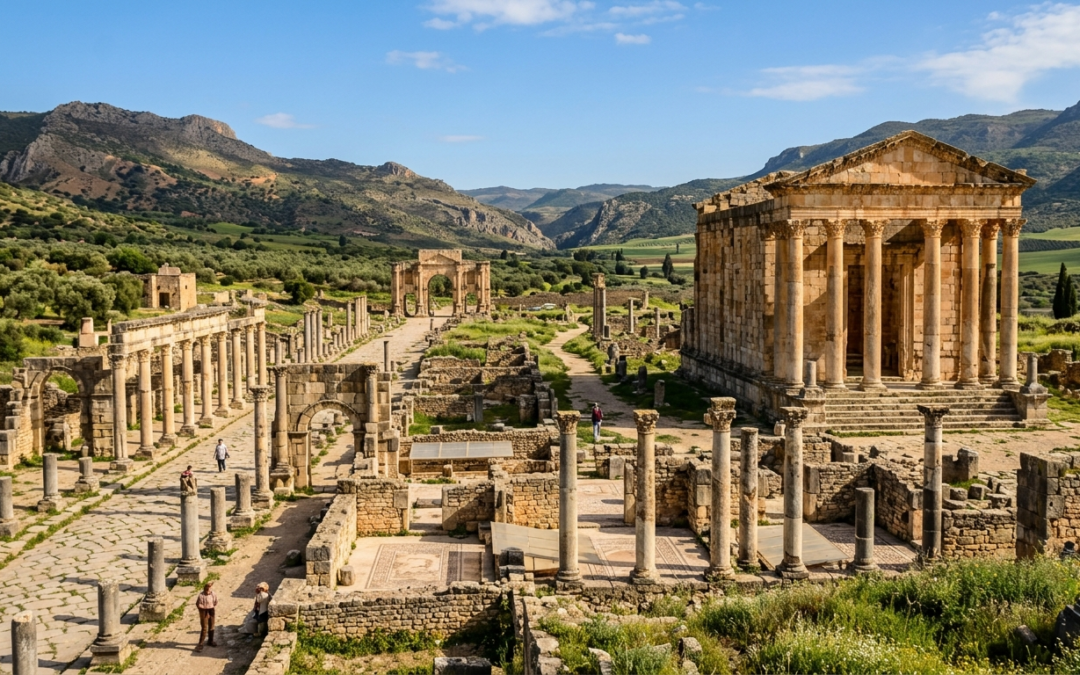
Morocco is widely known for its vibrant medinas, stunning landscapes, and deep cultural heritage. However, many travelers and history enthusiasts are surprised to discover that the country also holds some of the best-preserved Roman ruins in North Africa. These ancient archaeological sites reveal a fascinating chapter of Moroccan history when the Roman Empire expanded into the region known as Mauretania Tingitana.
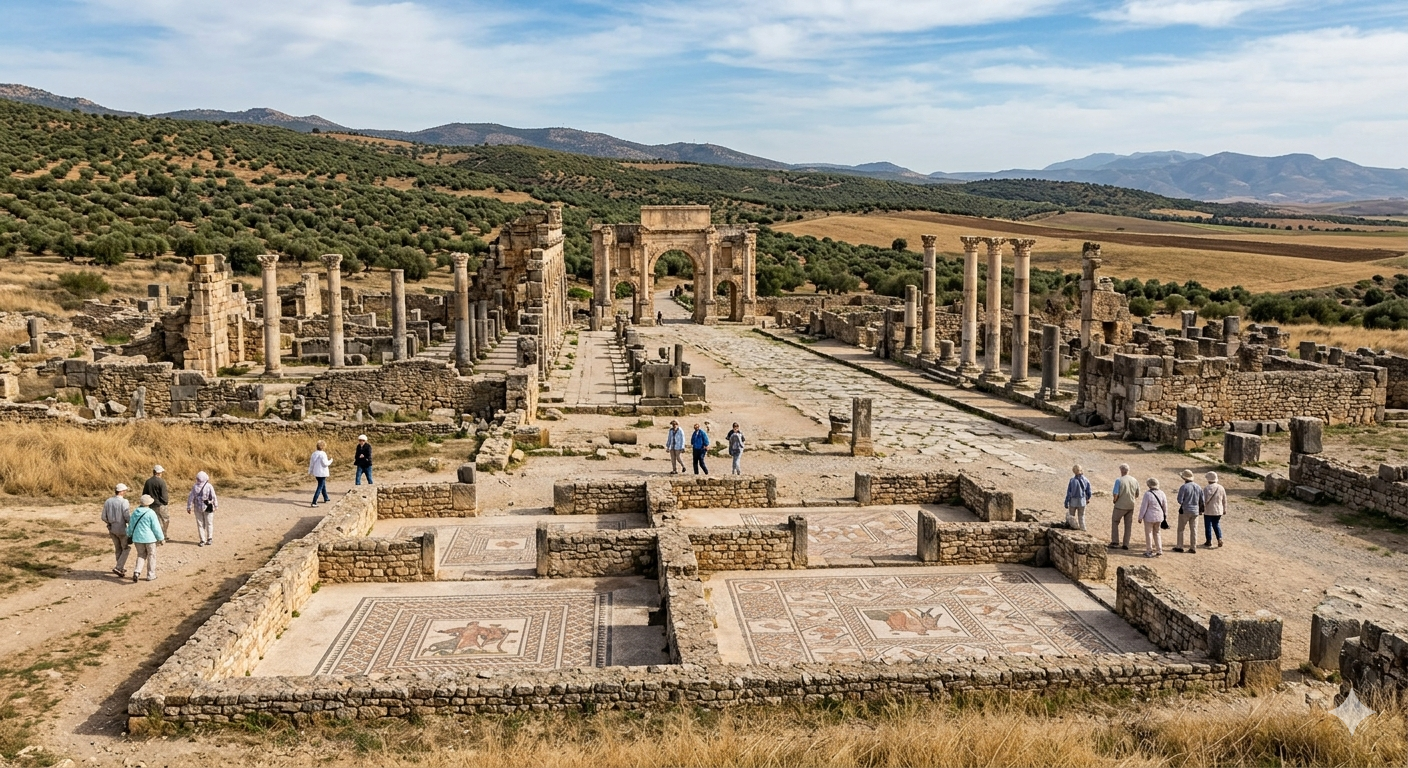
Among the most impressive sites is Volubilis, a remarkably preserved Roman city located near Meknes and not far from Fez. Recognized as a UNESCO World Heritage Site, Volubilis provides a vivid glimpse into Roman life through its mosaics, temples, basilicas, and triumphal arches.
This guide explores the history, architecture, and cultural importance of Roman ruins in Morocco, offering insights for travelers, students, and history lovers interested in the legacy of the Roman Empire in North Africa.
The History of Roman Presence in Morocco
Morocco During the Roman Empire
Before Roman influence, Morocco was home to Berber kingdoms. The region eventually became part of the Roman province known as Mauretania Tingitana. This province was established during the reign of the Roman Emperor Claudius in the first century AD.
The Romans did not conquer the entire territory of modern Morocco. Instead, they controlled key cities and agricultural regions that were important for trade and food production. Roman settlements became centers of administration, commerce, and cultural exchange between the Roman world and local Berber communities.
Strategic Importance of North Africa
North Africa was extremely valuable to the Roman Empire for several reasons:
- Fertile agricultural land
- Strategic Mediterranean trade routes
- Military defense against tribes beyond the empire’s borders
Cities in Morocco became important producers of olive oil, grain, and livestock, which were exported throughout the Roman Empire.
Volubilis – The Most Famous Roman Ruins in Morocco
Overview of the Ancient City
Volubilis is considered the best preserved Roman archaeological site in Morocco. Founded as a Berber settlement, the city later developed into a thriving Roman municipal town.
At its peak during the 2nd and 3rd centuries AD, Volubilis had thousands of residents and served as a major agricultural and commercial center.
Why Volubilis Became a UNESCO World Heritage Site
In 1997, UNESCO designated Volubilis a World Heritage Site due to:
- Exceptional preservation of Roman architecture
- Unique Roman mosaics
- Historical significance in North African history
- Evidence of Roman-Berber cultural interaction
The site today attracts archaeologists, historians, and tourists from around the world.
Key Attractions in Volubilis
The Triumphal Arch of Caracalla
One of the most recognizable monuments in Volubilis is the triumphal arch dedicated to the Roman emperor Caracalla.
Historical significance
The arch was built in 217 AD to honor the emperor and his mother. It symbolized Roman power and prosperity in the region.
Visitors today often take photographs beneath the arch, which stands as a powerful reminder of Roman influence in Morocco.
Roman Mosaics
Volubilis contains some of the most beautiful Roman mosaics in North Africa.
Famous mosaic themes
Many mosaics depict scenes from Roman mythology such as:
- Roman gods and goddesses
- Hunting scenes
- Daily Roman life
- Mythological creatures
These mosaics were typically found in wealthy Roman homes, demonstrating the prosperity of Volubilis residents.
The Basilica and Forum
The Basilica was the center of political and legal activities in the city.
Civic life in Volubilis
Roman citizens gathered here to:
- Conduct legal trials
- Discuss political matters
- Participate in public ceremonies
Nearby was the Forum, the central square where markets and social gatherings occurred.
Other Roman Archaeological Sites in Morocco
Although Volubilis is the most famous, several other Roman sites exist in Morocco.
Lixus
Lixus is one of the oldest archaeological sites in Morocco.
Historical importance
The site was originally founded by Phoenicians before becoming a Roman city. It was famous for its garum production, a fermented fish sauce widely exported across the Roman Empire.
Tamuda
Tamuda is another Roman military settlement.
Military role
Tamuda served as a Roman fortified camp, helping protect the northern frontier of the Roman province.
Banasa
Banasa was an important Roman colony established during the reign of Augustus.
Agricultural center
Banasa was known for its agricultural production and role in supplying goods to other parts of the Roman Empire.
Roman Architecture in Morocco
Roman architecture in Morocco demonstrates the advanced engineering and urban planning of the Roman Empire.
Urban Planning
Roman cities typically included:
- Forums
- Temples
- Public baths
- Markets
- Aqueduct systems
These features reflected Roman ideals of civic organization and social life.
Engineering Achievements
Roman builders used techniques that allowed structures to last for centuries, including:
- Stone masonry
- Arch construction
- Hydraulic engineering
Many ruins in Morocco remain standing after nearly 2000 years.
Cultural Influence of the Romans in Morocco
Roman and Berber Cultural Exchange
The Roman presence in Morocco did not erase local cultures. Instead, there was significant interaction between Roman settlers and Berber populations.
Local traditions influenced architecture, religion, and daily life in Roman cities.
Language and Religion
Latin was widely used in administration, but local languages continued to exist.
Religious practices included:
- Roman gods
- Local deities
- Imperial cult worship
This mixture of beliefs reflects the multicultural nature of Roman Morocco.
Visiting Roman Ruins in Morocco Today
Tourism and Historical Exploration
Roman ruins are now major attractions for cultural tourism. Visitors exploring northern Morocco often include Volubilis in their travel itinerary, especially when visiting Fez or Meknes.
Travel Tips
Best time to visit
The best seasons to visit Roman ruins in Morocco are:
- Spring
- Autumn
These seasons offer comfortable temperatures for walking around archaeological sites.
What to bring
Visitors should bring:
- Comfortable walking shoes
- Sun protection
- Water
- Camera
The ruins cover large open areas and require walking across uneven terrain.
Why Roman Ruins in Morocco Matter
Roman ruins in Morocco are not only historical monuments; they are also valuable cultural and educational resources. They provide insight into:
- Roman expansion into Africa
- Cultural exchange between civilizations
- Ancient urban development
- Archaeological preservation
Sites such as Volubilis remind us that Morocco has been an important crossroads of civilizations for thousands of years.
The Roman ruins in Morocco offer a unique opportunity to explore a lesser-known chapter of the Roman Empire. From the impressive mosaics and monuments of Volubilis to the lesser-known sites of Banasa, Lixus, and Tamuda, these archaeological treasures reveal the complexity of ancient life in North Africa.
For travelers, historians, and students alike, visiting these ruins is a journey back in time—one that highlights Morocco’s rich and diverse historical heritage.
1. Is Volubilis worth visiting?
Yes, Volubilis is considered one of the most impressive historical sites in Morocco. Visitors can walk through ancient Roman streets, admire colorful mosaics, and explore the ruins of temples and villas. Because of its historical significance and preservation, it remains one of the most popular cultural attractions near Meknes.
2. Are Roman ruins in Morocco well preserved?
Many Roman ruins in Morocco are well preserved, especially those at Volubilis. Archaeologists have uncovered mosaics, columns, and buildings that provide valuable insights into Roman architecture and urban life in North Africa.
3. When was Volubilis built?
The city developed mainly during the 1st and 2nd centuries AD, when the Roman Empire expanded across North Africa.