
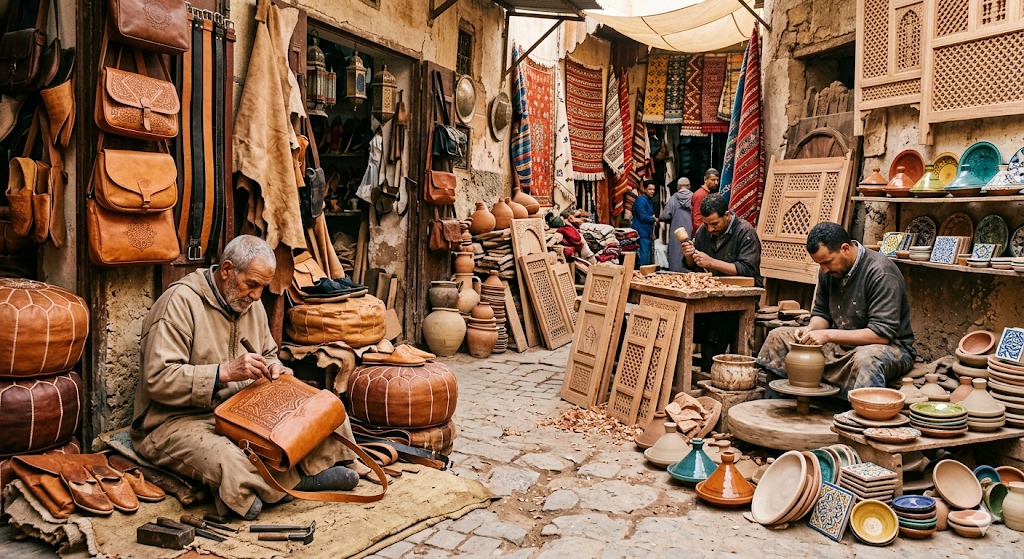
Morocco is a land of vibrant culture, rich history, and unmatched artisanal talent. From the bustling souks of Marrakesh to the ancient medinas of Fez, Moroccan traditional crafts reflect centuries of heritage and skill. These crafts are not just decorative—they tell stories of communities, traditions, and identities that have been carefully preserved over generations.
In this article, we’ll take you through Morocco’s iconic crafts, from leather and pottery to woodwork and metal jewelry, and show you how to experience them firsthand. Whether you’re a traveler, a cultural enthusiast, or a collector, Morocco’s handicrafts offer a unique glimpse into its artistic soul.
Discover the Rich Heritage of Moroccan Handicrafts
Moroccan crafts are more than souvenirs—they are an embodiment of local history and culture. Artisans in Morocco use natural materials and age-old techniques that have been passed down through generations. Many of these crafts are recognized worldwide for their quality, design, and cultural significance.
From Berber tribal motifs to Andalusian patterns, Moroccan crafts display a remarkable variety of styles and techniques. By purchasing or experiencing these crafts, you are not only acquiring a beautiful object but also supporting traditional artisans who preserve Morocco’s cultural legacy.
Iconic Moroccan Leather Crafts
Traditional Tanning Techniques in Fez and Marrakesh
Moroccan leather, especially from Fez, is world-famous for its quality and craftsmanship. The city’s Chouara Tannery, one of the oldest in the world, is still using traditional methods dating back centuries. Artisans dye leather in large stone vats using natural pigments like indigo, saffron, and poppy seeds. The result is a soft, durable leather with vivid colors.
Handmade Leather Goods: Bags, Slippers, and Wallets
Leather artisans in Morocco create a variety of products, including babouches (traditional slippers), handbags, belts, and wallets. Each piece is handcrafted, often personalized with intricate patterns or engravings. When you buy a Moroccan leather product, you are investing in a timeless piece of art.
Visiting the Chouara Tannery: Authentic Leather Craft Experience
Tourists can witness the leather-making process firsthand in Fez. Visiting the Chouara Tannery offers a sensory experience—vivid colors, rich smells, and artisans at work. Guided tours often explain the history of tanning and the significance of leather in Moroccan culture.
Moroccan Pottery and Zellige Tile Art
Regional Styles of Moroccan Pottery: Fez, Safi, Southern Morocco
Pottery is a central part of Moroccan life, used both for functional and decorative purposes. Cities like Fez and Safi are renowned for their ceramics. Fez pottery often features deep blue and white patterns, while Safi is famous for bold, colorful designs. In southern Morocco, pottery often includes earthy tones and Berber-inspired motifs.
Zellige Tile Techniques: From Clay to Masterpiece
Zellige, Morocco’s distinctive mosaic tilework, is created from individually chiseled tiles assembled into geometric patterns. It is commonly found in riads, palaces, and fountains. The process is labor-intensive and requires immense skill, making each piece a unique masterpiece.
Functional and Decorative Uses of Moroccan Ceramics
Moroccan ceramics are not only beautiful but also functional. From tagine pots for cooking traditional meals to decorative bowls and plates, they are an integral part of Moroccan homes. Many artisans also produce wall panels and floor tiles, allowing the art to be incorporated into modern decor.
Woodwork and Cedar Carving in Morocco
Cedar Wood Craftsmanship in Essaouira and the Middle Atlas
Moroccan woodwork is especially known for cedar and thuya wood. Artisans in Essaouira and the Middle Atlas Mountains specialize in intricate carving techniques, producing furniture, doors, and decorative panels. The natural aroma of cedar wood adds another sensory dimension to the craft.
Hand-Carved Furniture, Doors, and Panels
Each piece of Moroccan woodwork tells a story. From traditional mashrabiya window panels to elaborately carved doors, wood carving combines function and artistry. Local workshops often let visitors see the carving process from start to finish, offering a unique cultural insight.
Wood Carving Workshops for Tourists
Tourists can participate in workshops to learn basic carving techniques or try painting and finishing their own small wooden objects. This hands-on experience deepens appreciation for the artisans’ skill and dedication.
Moroccan Metalwork and Jewelry
Silver Jewelry with Traditional Berber Motifs
Moroccan jewelry, especially silver pieces, often features Berber motifs and symbols that have spiritual or cultural significance. Necklaces, bracelets, rings, and earrings are hand-forged and sometimes inlaid with semi-precious stones. Each design tells a story, whether of protection, fertility, or prosperity.
Brass and Copper Artisan Products
Metalwork also includes decorative items such as lanterns, teapots, trays, and bowls. Brass and copper are shaped using hammering, engraving, and inlay techniques. The shimmering glow of these items reflects both craftsmanship and Moroccan aesthetic sensibility.
Cultural and Symbolic Significance of Moroccan Metalwork
Metal objects are more than decoration—they often carry symbolic meanings, reflecting Morocco’s diverse cultural influences, from Berber and Arab to Andalusian heritage. Owning such pieces is a way of connecting to this rich tapestry.
Cities Famous for Moroccan Traditional Crafts
Fez: Leather and Pottery Hub
Fez is Morocco’s artisanal capital. Its medina is home to countless workshops producing leather, pottery, textiles, and metalwork. Visiting Fez is like stepping back in time, where traditional techniques are practiced exactly as they were centuries ago.
Marrakesh: Textiles, Leather, and Metalwork
Marrakesh is famous for its bustling souks, where visitors can find everything from handwoven carpets to leather goods and brass lanterns. The city is a melting pot of styles, combining Berber, Arab, and Moorish influences.
Essaouira: Wood Carving Legacy
Essaouira, a coastal town, is renowned for its cedar wood carvings. Artisans here create furniture, frames, and decorative items that are highly sought after by collectors. The town’s relaxed atmosphere makes visiting workshops a pleasure.
Meknes and Tetouan: Decorative and Andalusian Craft Influence
Meknes and Tetouan showcase Andalusian-inspired decorative arts, including intricate tilework and embroidery. These cities are ideal for travelers seeking more refined and elegant Moroccan craft styles.
Experiencing Moroccan Crafts as a Tourist
Visiting Artisan Workshops Across Morocco
Many Moroccan artisans welcome tourists into their workshops, providing an authentic look into their craft. Visitors can observe techniques, ask questions, and see the full process of creating handmade goods.
Hands-On Craft Experiences for Travelers
Some workshops offer hands-on sessions where travelers can try leather stamping, pottery shaping, or tile assembly. These immersive experiences create lasting memories and a deeper understanding of Moroccan culture.
Final Thoughts
Moroccan traditional crafts are a living heritage, blending creativity, history, and cultural identity. From leather to pottery, woodwork to metal jewelry, every piece embodies the skill and passion of Moroccan artisans. By exploring these crafts, visiting workshops, or purchasing handmade items, you not only support local communities but also carry a piece of Morocco’s rich artistic legacy with you.
Whether you are a traveler, collector, or cultural enthusiast, Moroccan handicrafts offer an unforgettable journey into the heart of Morocco.
What materials are commonly used in Moroccan handicrafts?
1. Leather
Leather is one of Morocco’s most iconic craft materials. Ancient tanneries, particularly in Fez, process goat and cow leather using traditional methods.
Common Leather Crafts:
- Babouches: Traditional Moroccan slippers.
- Handbags and Wallets: Often dyed with natural pigments.
- Poufs and Jackets: Soft, durable, and hand-stitched.
Cultural Significance: Leather items are both functional and decorative, often reflecting local styles and artisanal skill.
2. Textiles
Textiles are central to Moroccan culture. Artisans use sheep’s wool, cotton, silk, and linen to produce woven and embroidered goods.
Popular Textile Crafts:
- Berber Rugs and Carpets: Handwoven with geometric motifs.
- Clothing: Traditional garments like jellabas and caftans.
- Blankets and Throws: Often dyed with natural pigments like indigo and saffron.
Cultural Significance: Textiles reflect regional identity, tribal patterns, and social customs.
How can I participate in a Moroccan craft-making workshop as a tourist?
Choose the Type of Workshop
- Leather Crafting: Learn to make babouches (slippers), bags, or wallets using traditional tanning and dyeing techniques, especially in Fez or Marrakesh.
- Pottery and Zellige Tiles: Try your hand at shaping clay, painting patterns, or assembling mosaics in Safi, Fez, or Meknes.
- Textiles and Weaving: Join workshops for Berber rug weaving, embroidery, or dyeing textiles with natural indigo.
- Wood Carving: Experience working with Thuya or cedar wood to carve decorative panels, boxes, or furniture in Essaouira.
- Jewelry Making: Create silver or beaded pieces with Berber motifs, often including amulets or enamel work.
Tips for a Great Experience
- Wear comfortable clothes suitable for working with materials like clay, dye, or wood.
- Bring a camera to capture the process, but always ask permission if photographing artisans.
- Be open to learning traditional methods, which may differ from modern techniques.
- Consider buying additional handmade items directly from artisans to support the local economy.
What is the significance of Berber motifs in Moroccan jewelry?
Berber Jewelry: Key Meanings and Symbolic Elements
1. Protection
One of the most ubiquitous symbols in Moroccan and Berber jewelry is the Khamsa (Hand of Fatima). This palm-shaped amulet is believed to ward off the evil eye and protect the wearer from negative energies. Many necklaces, bracelets, and rings feature the Khamsa, often combined with other geometric motifs.
2. Fertility and Strength
Geometric shapes—triangles, diamonds, and almond motifs—represent the female form, fertility, and the stability of the home. These shapes are not merely decorative; they communicate social values, emphasizing the importance of family, motherhood, and resilience in Berber culture.
3. Material Symbolism
Materials are chosen not only for beauty but for spiritual and social meanings:
- Silver: Symbolizes purity, white, and piety. Most traditional pieces are silver-heavy.
- Amber: Considered a good luck charm.
- Coral: Represents vitality and life energy.
The combination of materials often communicates both the artisan’s skill and the wearer’s social and spiritual identity.
4. Cultural Identity
Ornate and large pieces, like fibulae (Tizerai) or multi-layered necklaces, often identify a woman’s tribal affiliation, region, or marital status. Jewelry is a living archive of heritage, telling the story of generations and preserving cultural identity.
5. Economic Independence
Jewelry in Berber culture serves as more than adornment. It acts as a “portable bank”, forming part of a woman’s dowry and providing financial security in times of hardship. Pieces could be melted, traded, or sold, giving women autonomy and economic empowerment.
Regional Variations in Berber Jewelry
- Morocco (Atlas/Sahara)
- Heavy silver construction
- Enamel decorations
- Large hinged bracelets
- Emphasis on bold, protective designs
- Algeria (Kabylie)
- Vibrant multicolored enamel (cloisonné)
- Use of coral for color and symbolism
- Detailed, delicate designs with multiple layers
- Southern/Tuareg Tribes
- Geometric silver designs, often with crosses or talismans
- Jewelry carries protective and symbolic meanings, often unisex
Common Types of Berber Jewelry
- Fibula (Tizerai): Triangular brooches used to fasten traditional garments, often worn as a statement of identity.
- Khalkhal: Ankle bracelets indicating marital status or social rank.
- Necklaces: Layered silver, amber, enamel, and coral, sometimes including talismans or protective amulets.
Older pieces are rare and treasured because they are often melted and redesigned, making authentic antique jewelry highly valuable.