Yennayer: How Morocco Celebrates the Amazigh New Year
November 10, 2026 • 8 min read
Every January, while most of the world has already moved on from New Year, families across Morocco gather around a second one. Yennayer, the Amazigh New Year, falls in the coldest weeks of winter, and it is celebrated with a shared meal, a hidden almond or date stone, songs, and wishes for a good harvest. Since 2024 it has also been an official paid public holiday in Morocco.
This guide answers the questions travellers and curious readers ask most: what Yennayer is, when it falls in 2027, how it is celebrated, whether it is a public holiday, and how you can experience it respectfully if you are visiting. We have only included facts we could source, and we flag the details that vary from region to region.
At a glance
Yennayer 2027
Thursday 14 January
Official Moroccan public holiday
Amazigh year
2977
Starts in January 2027
Typical dish
Seven-vegetable couscous
or tagoula porridge
Best places to see it
Amazigh villages
High Atlas, Souss & southeast oases
Best time to book
December
Mid-January is quiet and cold
What is Yennayer?
Yennayer is the first month of the Amazigh (Berber) calendar and the name of the Amazigh New Year. According to Morocco World News, the name comes from the Amazigh words yan (“one”) and ayyur (“month”), literally “the first month”. It is also called Id Yennayer or Id Suggas, which the same article glosses as “night of the year”.
The calendar began as an agrarian one, tied to the seasons and to farming tasks, and it follows the Julian solar calendar. That is why Yennayer is the farmer’s new year: it marks the end of one agricultural cycle and the start of the next, with prayers for rain, fertile land and a good harvest.
The year count is a modern convention. It starts in 950 BCE, the year the Amazigh king Sheshonq I (also written Chachnaq or Shoshenq) is said to have taken the throne of pharaonic Egypt. The Algerian Amazigh scholar Ammar Negadi formalised this count in 1980. Morocco World News adds that some historians doubt the legend, so it is best presented as a tradition rather than a settled fact. By this count, January 2026 was the year 2976.
Yennayer is not specific to Morocco. It is celebrated across North Africa, notably in Algeria, and by the Amazigh diaspora. For more on the people behind it, see our guide to the Amazigh people of Morocco and Berber culture and traditions in Morocco.

When is Yennayer in 2027?
In Morocco, Yennayer 2027 is on Thursday 14 January. That is the official public holiday date listed by OfficeHolidays. The Amazigh calendar year will be 2977.
The date can look confusing because the traditional and official dates differ slightly:
| Date | What it refers to |
|---|---|
| 12 January | Traditional first day of Yennayer in many communities; the family meal is often prepared on the evening of the 12th |
| 13 January | The date many sources give as the focal day of the celebration, reflecting the gap between the Julian and Gregorian calendars |
| 14 January | The official paid public holiday in Morocco |
Sources disagree on the exact day, even among reputable outlets. Morocco World News says celebrations often begin on the evening of 12 January and continue through 13 and 14 January, while Africanews gives 13 January. If you plan to visit for Yennayer, treat 12 to 14 January as the celebration window and check with your host or guide which evening their family will mark it.
How do Moroccans celebrate Yennayer?
Yennayer is celebrated mainly with a family meal, and the details change from region to region. The sources we checked agree on the core ideas: abundance, fertility of the land, and hopes for the year ahead.
The food
Seven-vegetable couscous or a porridge is typical. In the southeastern oases the holiday is also called sebaa khodhar, “seven vegetables”. In the High Atlas and the Souss, households prepare tagoula (also called asida), a barley or corn porridge served with butter, honey and argan or olive oil. Africanews describes an almond hidden in a mound of couscous topped with boiled eggs and cinnamon in the Ouirgane valley, south of Marrakech. OfficeHolidays also lists orikmen, a wheat and dried fava bean soup eaten on the first day.
The hidden seed
A date stone or almond is hidden in the shared dish. Whoever finds it is considered blessed for the year; in some areas the finder is called amnaz, “seed of the year”, and symbolically receives the keys to the household granary.
Other customs
Morocco World News mentions storytelling, the almond game waz tyuy, ahwach dances and travelling rouaiss musicians. Children may get new clothes or a first haircut, and farmers may plant olive saplings. Africanews notes one tradition: families leave the table while food is still on it, to ward off hunger in the coming year.
Greetings
The most common is Aseggas Amaynou, “new year”. Morocco World News also lists Aseggas Ighoudan and Aseggas Ambarki as common greetings.
Customs differ between villages and families, so treat this as a guide, not a rulebook. To learn more about the wider culture, read our guide to Berber traditions in Morocco. For more Moroccan family traditions, see Moroccan wedding ceremony traditions and Ramadan rituals.

Is Yennayer a public holiday in Morocco?
Yes. Since 2024, Yennayer (the Amazigh New Year) has been an official paid public holiday in Morocco, observed every year on 14 January.
- 2011: a constitutional reform recognised Tamazight as an official language alongside Arabic.
- May 2023: King Mohammed VI announced that the Amazigh New Year would become an official paid holiday.
- Decree No. 2.23.1000: OfficeHolidays says this decree, an amendment to Decree No. 2.04.426 of December 2004, specifically designates 14 January.
- 2024: the first Amazigh New Year officially celebrated across Moroccan institutions (year 2974 on the Amazigh calendar).
For visitors, a public holiday means banks, administrations and some shops may be closed on 14 January, while tourist services generally keep running. Confirm opening hours for the specific places you plan to visit.

Where can you experience Yennayer as a visitor?
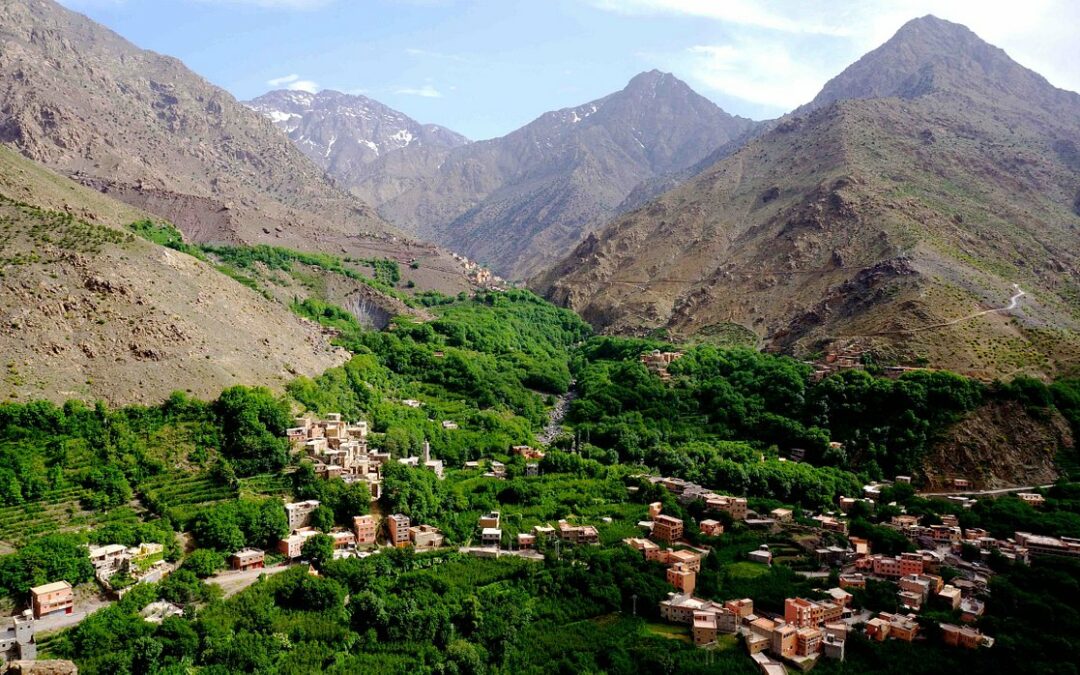
The most authentic Yennayer is celebrated in Amazigh homes and villages, so the best way to experience it is through a local host or guide rather than a staged show. The sources we checked place the traditions in the High Atlas, the Souss valley and the southeastern oases.
- High Atlas villages. Africanews reports tagoula with a hidden date stone in High Atlas households, and an almond hidden in couscous in the Ouirgane valley south of Marrakech. Valleys such as Ourika are reachable from Marrakech; see our Ourika day trip and tours from Marrakech.
- The Souss and Anti-Atlas. Morocco World News mentions tagoula served with argan oil in the Souss, the argan heartland around Agadir and Taroudant.
- Southeastern oases. The same source says the holiday is called sebaa khodhar (“seven vegetables”) there. Our 5-day desert tour from Marrakech passes through this region, though you should not expect organised Yennayer events on a standard itinerary.
- Cities. In January 2026 the Commune of Agadir announced a four-day programme from 11 to 14 January with talks, concerts, evening arts events, craft and regional-product exhibitions and family activities, run with the Souss-Massa region and the Timitar festival association. Programmes change each year, so check the current announcement.
Etiquette for guests
If you are invited to a meal, accept with thanks, bring something small such as dates, dried fruit or pastries, and ask before photographing people. Do not assume every family follows the same customs; ask your host what their tradition is.
January is cold in the mountains and desert nights can be near freezing, so pack warm layers. Our Morocco winter travel guide covers what to expect.

Can you plan a Morocco trip around Yennayer?
Yes, and 12 to 14 January is a good moment for a quiet, culture-focused winter trip, as long as you plan ahead. It is low season for tourism, which usually means fewer crowds. It is also cold in the mountains, and 14 January is a public holiday, so some local services may be closed.
A simple way to build the trip:
- Base yourself in Marrakech for the first days, then take a day trip into the Atlas, for example the Ourika valley.
- Ask for a village meal. A private guide can arrange a home-hosted meal with an Amazigh family. Request it early, because families plan their own celebrations around the same dates.
- Add a longer circuit if you have time, such as the desert tour from Marrakech, keeping in mind that desert nights are very cold in January.
- Check dates. Confirm 14 January 2027 (Thursday) against your own calendar and ask your host which evening their family celebrates.
We can design a private itinerary around Yennayer, with a local driver-guide and a family meal if one is available. Contact us with your dates.
Yennayer FAQ
What does Yennayer mean?
It comes from the Amazigh words yan (“one”) and ayyur (“month”), so it means “the first month”. It is the name of both January in the Amazigh calendar and the New Year celebration.
What year is the Amazigh calendar in 2027?
January 2026 was year 2976, so Yennayer in January 2027 begins year 2977. The count starts in 950 BCE, tied to the accession of King Sheshonq I in Egypt.
What is the date of Yennayer in Morocco?
The official public holiday is 14 January every year. Many communities begin the celebration on the evening of 12 January, and some sources give 13 January as the main day.
What do you eat for Yennayer?
Couscous with seven vegetables, tagoula (barley or corn porridge with butter, honey and oil), and in some areas orikmen, a wheat and fava bean soup. A date stone or almond is hidden in the dish.
How do you say happy Amazigh New Year?
“Aseggas Amaynou” is the most widely cited greeting. “Aseggas Ambarki” and “Aseggas Ighoudan” are also used.
Is it a good time to visit Morocco in mid-January?
It is a quieter, cooler month. Expect cold nights in the mountains and desert and some snow in the High Atlas. It suits cultural and city trips better than beach holidays. See our Morocco winter travel guide.
Yennayer is a farmers’ New Year, a statement of Amazigh identity, and since 2024 an official holiday in Morocco. The date to remember for 2027 is Thursday 14 January, with celebrations starting around the evening of 12 January. The heart of it is simple: a shared meal, a hidden almond or date stone, and wishes for rain and a good harvest.
If you want to see Morocco beyond the usual highlights, mid-January can be a rewarding time, provided you pack warm and travel with people who know the villages. We are happy to build a private trip around it.
Celebrate the Amazigh New Year with a local family
Private Yennayer trips
Travel 12–14 January with a Berber driver-guide, a village stay in the Atlas and, when a family can host you, a home-cooked Yennayer meal. Tell us your dates and we will design the route around you.
Related tours
Private tours from Marrakech into the Atlas and Amazigh villages





Related articles

Top Reasons Morocco Is the Perfect Holiday Destination for British Travelers (UK)
When British travelers think of a getaway that combines sunshine, culture, and adventure, Morocco increasingly tops the list. Just a few hours’ flight from the UK, this North African gem offers a vibrant escape from the often gray skies of Britain, inviting visitors...
The Ultimate Morocco Travel Guide for American Travelers
Planning a trip to Morocco from the United States can feel both exciting and overwhelming. From the bustling markets of Marrakech to the endless dunes of the Sahara, Morocco offers a travel experience unlike any other. Whether you’re seeking vibrant culture, stunning...

The Ultimate Morocco Travel Guide for Spanish Travelers: Special Tips
Morocco has always held a special allure for Spanish travelers. Just 14 kilometers across the Strait of Gibraltar, this North African gem offers an exotic escape that feels both familiar and thrillingly different. The shared history, cultural echoes, and linguistic...