Morocco Weather in January: What to Expect and Where to Go
November 9, 2026 • 10 min read
Morocco Weather in January: What to Expect and Where to Go
Morocco weather in January is cool, mostly sunny in the south and wetter in the north, and it varies more by region than most visitors expect. According to 1991–2020 climate averages from Climates to Travel, Marrakech reaches about 19°C in the afternoon and falls to about 6°C at night, while Ifrane in the Middle Atlas drops to around -1°C. Tangier gets the most rain of the main cities, with about 100 mm over 10 rainy days.
That makes January a good month for city sightseeing and desert trips, and a weaker one for swimming, since the Atlantic and Mediterranean are only about 16–18°C. This guide covers temperatures by city, snow in the Atlas, what to pack and where to go, so you can match your route to the weather. Every figure comes from the sources linked in each section, and real conditions change from year to year.
Last updated: November 2026
At a glance
Daytime highs
16–21°C
Most cities · 9.4°C in Ifrane
Night lows
-1°C to 9°C
Middle Atlas to Casablanca
Wettest vs driest
Tangier vs Ouarzazate
≈100 mm vs 5 mm of rain
Sun & daylight
≈6.5 h of sun
10.5 h of daylight a day
Snow
Atlas Mountains
Ski season starts in January
Table of contents
What Is the Weather Like in Morocco in January?
January is one of the coolest months in Morocco, with mild days, cold nights and clear differences between the coast, the cities, the mountains and the desert. Across the stations in the Climates to Travel dataset (1991–2020 averages), the average January low is about 7°C and the average high about 17°C, with roughly 6.5 hours of sunshine a day and about 10.5 hours of daylight.
What that means in practice depends on where you are:
- Atlantic and northern coast (Casablanca, Rabat, Tangier): mild but the wettest part of the country, with the most rain and the greyest skies.
- Inland cities (Marrakech, Fes): pleasant afternoons and chilly nights, with Marrakech drier and sunnier than Fes.
- South of the Atlas (Ouarzazate, the Sahara side): very little rain, clear skies and big swings between warm afternoons and cold nights.
- Mountains (Ifrane, the High Atlas): cold, with frost at night and snow possible.
- Agadir and the southern Atlantic coast: the warmest and driest of the coastal options.
The exact numbers for each city are in the table in the next section. Sources differ by a degree or two, because each uses a different station, period or method, so treat any single figure as a guide rather than a forecast.
Is January a Good Time to Visit Morocco?
Yes, if you plan for it: January suits cities, culture and the desert, and it is a weaker choice for beaches and for travelers who dislike cold nights. Travel sites do not agree on this. The Best Time to Visit rates January as low season and calls it a relatively poor month overall, while recommending the dry south for travelers who want to avoid rain.
What works in January
- Dry weather in the south. Ouarzazate and Errachidia average only 2 rainy days in January (Climates to Travel), which makes desert and kasbah routes reliable.
- Comfortable sightseeing. Marrakech averages about 19°C in the afternoon, which is easier for walking the medina than summer heat.
- Low season. Fewer visitors usually means quieter sites, though we have no January visitor numbers to quote.
- Snow in the mountains. January is also the start of the ski season at Oukaïmeden. See our guide to skiing in Morocco.
What to weigh against it
- Cold nights almost everywhere inland, and below freezing in the mountains.
- Rain in the north. Tangier averages 10 rainy days and about 100 mm in January.
- Short days. About 10.5 hours of daylight, so start sightseeing early.
- Cold sea. Roughly 16–18°C on the coast, which is too cold for most swimmers.
Public holidays in January 2027 (per Calendarific, dates can change with official announcements): New Year’s Day on 1 January, the Anniversary of the Independence Manifesto on 11 January, and Amazigh New Year on 14 January. Check opening hours if you plan to book something on those days.
If you are also considering December, read our guide to the Sahara Desert in December, and for the wider season see our Morocco winter travel guide.
How Cold Is Morocco in January?
Morocco in January is cold at night but mild by day: average afternoon highs are 16–21°C in most cities, while average lows range from -1°C in the mountains to about 9°C on the Atlantic coast. The table below uses 1991–2020 averages from Climates to Travel.
| City | Average low (°C) | Average high (°C) | Rain (mm) | Rainy days |
|---|---|---|---|---|
| Marrakech | 5.9 | 19.2 | 30 | 8 |
| Casablanca | 9.0 | 17.6 | 65 | 8 |
| Fes | 3.8 | 16.2 | 60 | 7 |
| Tangier | 8.0 | 16.8 | 100 | 10 |
| Rabat | 6.8 | 17.4 | 85 | 9 |
| Agadir | 8.1 | 20.7 | 40 | 5 |
| Ouarzazate | 2.4 | 17.2 | 5 | 2 |
| Errachidia | 2.8 | 16.1 | 10 | 2 |
| Ifrane (1,650 m) | -1.0 | 9.4 | 125 | 8 |
A few things stand out:
- Agadir is the warmest of the main cities, with an average high of 20.7°C and only 5 rainy days.
- Marrakech and Fes feel quite different at night. Marrakech averages 5.9°C, Fes 3.8°C, and Fes has more rain.
- The south is dry but cold after dark. Ouarzazate (about 1,150 m) and Errachidia (about 1,035 m) average only 2.4°C and 2.8°C at night.
- The Middle Atlas is a different climate. Ifrane averages 9.4°C by day and drops below freezing at night, with the most rain on the list.
What about the Sahara? The table has no Merzouga station. The weather site Best Date Weather lists Merzouga at about 18°C by day with a range of 4–18°C, rain on about 3% of days and 7.2 hours of sunshine. That page uses modelled (ERA5 reanalysis) data rather than a weather station, so treat it as an estimate. Errachidia, the main city in the same region, gives a similar picture in the table above, with a January low of 2.8°C.
Does It Snow in Morocco in January?
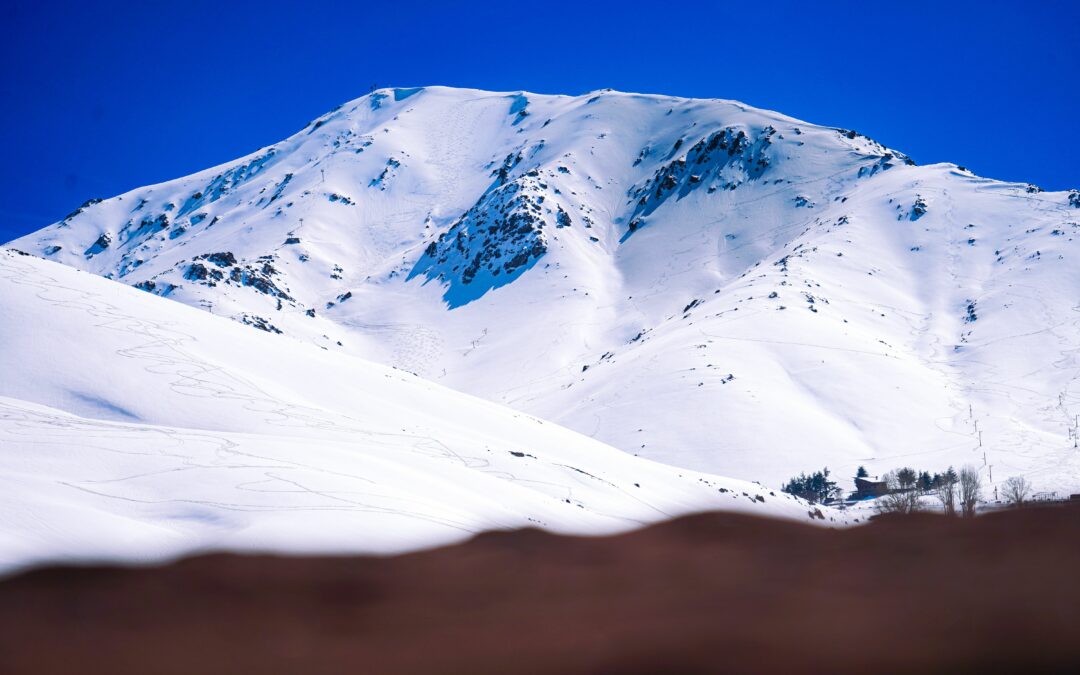
Yes, it can snow in the Atlas Mountains in January, but not in the places most visitors stay. Marrakech (about 460 m) averages a 19.2°C afternoon high in January, and the coastal cities have warmer nights, so city trips are about cool, sometimes wet weather rather than snow (Climates to Travel).
Snow belongs to the mountains:
- High Atlas and Oukaïmeden. The main ski area is about 45 km south of Marrakech. Snowtrex puts the best skiing from early January to mid-March, and Wikivoyage names January and February. Modelled data from Best Date Weather shows a January daytime high of about 6°C and a range of -2°C to 6°C.
- Mount Toubkal. Wikivoyage gives its height as 4,176 m, so winter conditions there call for proper mountain experience and equipment.
- Middle Atlas. Ifrane (1,650 m) averages a January low of -1°C and a high of 9.4°C, and Michlifen, a small ski area in the same mountains, is listed by Snowtrex with 1 km of piste and two lifts.
Snow varies from year to year, so check live conditions on Snow-Forecast and ask your driver or hotel about the road before you set out. For the full resort guide, read our article on skiing in Morocco. If you prefer walking to skiing, see our guides to hiking in the Atlas and the best hiking trails in Morocco.
What Should You Pack for Morocco in January?
Pack layers: you will often start the day in a jacket, strip down by the afternoon and need warm clothes again after sunset. What you add depends on where you are going.
| Where you are going | Pack | Why (January figures) |
|---|---|---|
| Cities (Marrakech, Fes) | Light layers, a warm jacket for evenings, comfortable walking shoes | Marrakech 5.9–19.2°C, Fes 3.8–16.2°C |
| North and Atlantic coast (Tangier, Rabat, Casablanca) | Waterproof jacket or compact umbrella, closed shoes | Tangier averages 10 rainy days and about 100 mm of rain |
| Sahara and desert towns | Fleece or down layer, warm hat, scarf, thick socks | Average lows of 2.4°C (Ouarzazate) and 2.8°C (Errachidia), about 4°C estimated for Merzouga |
| Atlas and snow | Waterproof boots, gloves, insulated jacket | Ifrane averages -1°C at night |
| Everywhere | Sunglasses, sun cream, a refillable bottle | About 6.5 hours of sunshine a day on average |
Figures from Climates to Travel and Best Date Weather (modelled data for Merzouga).
Two practical points. First, if you are sleeping in a desert camp, ask the camp in advance what bedding and heating it provides, and bring your own warm layers regardless. Second, sunlight is stronger than people expect even in winter, so keep sun protection in your day bag.
For a longer checklist, see our Sahara desert packing guide.

Where Should You Go in Morocco in January?
For January, base yourself in Marrakech or Agadir, add the dry south for the desert, and keep the rainy north for another season. The figures below come from Climates to Travel unless noted.
- Marrakech and the Atlas foothills. About 19°C by day and only 30 mm of rain make it the easiest January base. It is also the starting point for the Oukaïmeden ski area and for desert tours. Browse our tours from Marrakech or the 5-day desert tour from Marrakech.
- The Sahara and the south (Merzouga, Ouarzazate). Very little rain and clear skies, but cold nights, so pack warm layers. See our 3-day Sahara tour from Marrakech to Merzouga and our Sahara in December guide for what a winter night in camp is like.
- Agadir and the southern coast. The warmest city on the list, with a 20.7°C average high and 5 rainy days. The sea is still only about 18°C, so think sunny walks and terraces rather than swimming. See our 5-day Sahara tour from Agadir.
- Essaouira. The Best Time to Visit lists an average high of 19°C and about 8 hours of sunshine a day, though that dataset differs from the one above.
- Fes and the imperial cities. Fes averages 16.2°C by day and 3.8°C at night, with some rain, so pack a waterproof layer. The medina suits cool weather well, and our free walking tour of Fes is an easy way to see it. More options: tours from Fes.
- Oukaïmeden for skiing. If you want snow, January is in season. Read our guide to skiing in Morocco.
Think twice about the northern coast. Tangier averages about 100 mm of rain over 10 days in January, and Casablanca and Rabat are also wetter than Marrakech. If your route includes them, keep the plan flexible.
Morocco Weather in January: Frequently Asked Questions
Is Morocco too cold in January?
For most travelers, no. Average afternoon highs are 16–21°C in most cities, but nights fall to 2–9°C, and the mountains drop below freezing (Climates to Travel). Pack layers and a warm jacket for evenings.
Does it rain in Morocco in January?
Yes, mainly in the north and on the Atlantic coast. Tangier averages about 100 mm over 10 rainy days, Marrakech about 30 mm over 8 days, and Ouarzazate only 5 mm over 2 days (Climates to Travel). Bring a light waterproof jacket for northern routes.
Can you visit the Sahara in January?
Yes. Rain is rare, with 2 rainy days in Errachidia and about 3% of days estimated for Merzouga (Best Date Weather), but nights are cold. Errachidia averages a 2.8°C low. Ask your camp what bedding and heating it provides.
Which Moroccan city is warmest in January?
Among the cities we checked, Agadir, with an average high of 20.7°C and 5 rainy days. Marrakech is next at 19.2°C by day, with colder nights at 5.9°C (Climates to Travel).
Is January a good month for a Morocco tour?
It works well for cities and the desert, and it is low season, so sites are usually quieter. Expect cold nights, some rain in the north and short days of about 10.5 hours. See our tours from Marrakech for January-friendly routes.
What should you wear to a desert camp in January?
Dress in layers: a fleece or down jacket, warm hat, scarf and thick socks, with lighter clothes underneath for the afternoon. Nights average about 2–4°C in the desert towns we checked, so bring warm sleepwear too.
Morocco weather in January is cool rather than cold in the daytime and cold at night, with a clear split between the wetter north, the sunny and dry south, and snow in the Atlas. Marrakech, Agadir and the desert make the most reliable January bases, the northern coast is the wettest, and layers solve most problems. Real conditions vary by year, so check the forecast a few days before you travel.
Plan a Morocco trip that fits the January weather
January trips
Tell us your dates, group size and what you want to see, and our local team will suggest a route that suits the season, from Marrakech and the Atlas to a Sahara camp. You can also browse our tours from Marrakech.
Related tours
Private tours from Marrakech to the Atlas and the Sahara





Related articles
Tafraoute Almond Blossom: When and Where to See It
Tafraoute Almond Blossom: When and Where to See ItNovember 10, 2026 • 6 min readEvery winter, the almond trees around Tafraoute in Morocco’s Anti-Atlas mountains turn the valleys pink and white. It is one of the quietest and most photogenic times to visit...
Skiing in Morocco: Your Guide to Oukaïmeden and the Atlas Ski Season
Skiing in Morocco: Your Guide to Oukaïmeden and the Atlas Ski SeasonNovember 9, 2026 • 9 min readSkiing in Morocco surprises most visitors who arrive expecting only sand and souks. In winter, the High Atlas mountains south of Marrakech can hold enough snow...

Souk Secrets: Your Guide to Stress-Free and Ethical Shopping in Morocco
Morocco's souks represent some of the world's most vibrant and captivating marketplaces, offering an astonishing array of handmade crafts, aromatic spices, and unique treasures. However, these bustling traditional markets can also feel overwhelming for visitors...