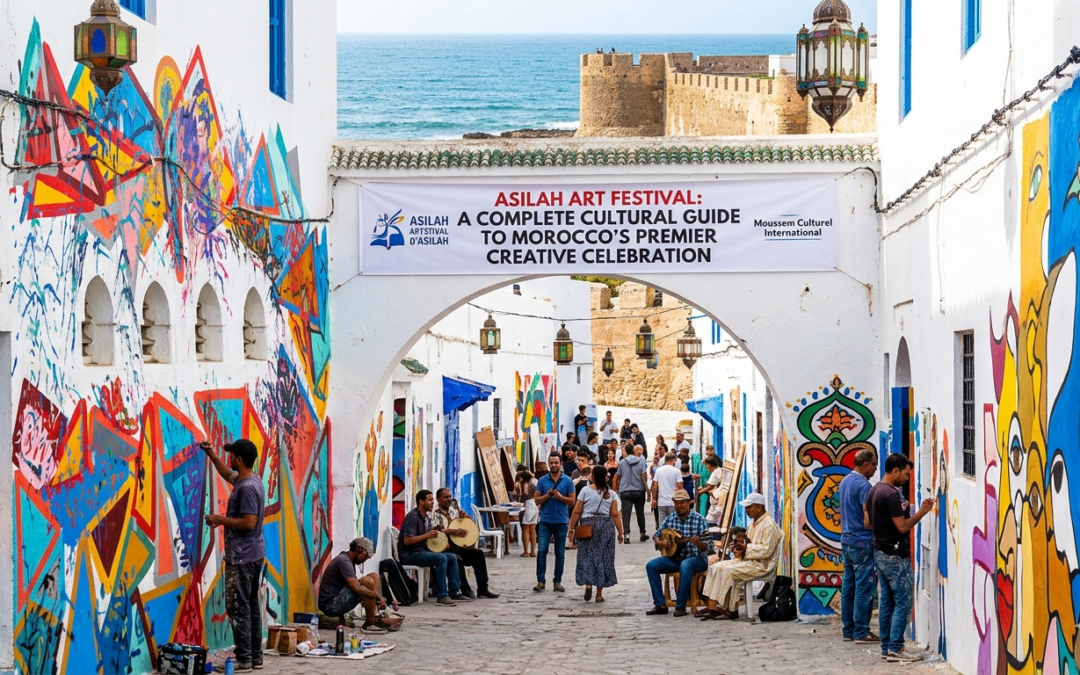
The Asilah Art Festival (also known as the Cultural Moussem of Asilah) is one of North Africa’s most celebrated cultural events, turning the historic coastal city of Asilah, Morocco, into a vibrant open‑air gallery each summer and beyond. From thousands of visitors and international artists to children’s workshops and intellectual seminars, the festival is a powerful testament to the importance of art as a tool for cultural dialogue, urban renewal, and tourism development.
Since its creation in 1978, the festival has helped transform Asilah from a small coastal town into a dynamic cultural hub where ancient walls become canvases, ideas flow freely, and community spirit thrives.
This guide dives deeply into the heart of the festival — its history, events, meaning, travel planning tips, and reasons it should be on every art lover’s journey through Morocco.
What Is the Asilah Art Festival?
The Asilah Art Festival is an annual international cultural festival that celebrates visual arts, music, performance, workshops, and dialogue. Its most famous feature is a tradition of transforming the whitewashed medina walls of Asilah into large‑scale murals and artworks created by international artists, giving the city an ever‑changing colorful identity.
Often called a Moussem (a Moroccan term for a seasonal festival or fair), this event brings together artists, thinkers, musicians, poets, dancers, and tourists in a fusion of creativity and community energy.
Origins and History
The festival began in 1978, co‑founded by artist Mohammed Melehi and politician/philosopher Mohamed Benaissa. Originally intended to renew the urban fabric of Asilah and strengthen cultural exchange, the event quickly grew into an international phenomenon.
Unlike many festivals that focus purely on entertainment, the Asilah event was designed to be a force for cultural dialogue, bringing artists from Morocco and around the world to share their perspectives, techniques, and ideas in public spaces.
Over time, this public art initiative — painting murals each year — became the festival’s defining feature: white walls were no longer blank; they became a canvas of collective expression.
Festival Structure and Sessions
In recent years, the Asilah cultural season has evolved into a multi‑session event that extends its creative influence throughout the year, rather than only in summer:
Spring Session
- Focuses on visual arts, with workshops on engraving, lithography, painting, and collaborative projects.
- Artists from Morocco and abroad participate in structured residencies and interactive sessions.
- The season’s exhibits are often hosted in venues like Centre Hassan II for International Meetings.
Summer Session (The Heart of the Festival)
This is the most famous part of the festival:
- Usually held in July (2026 edition: July 5–27).
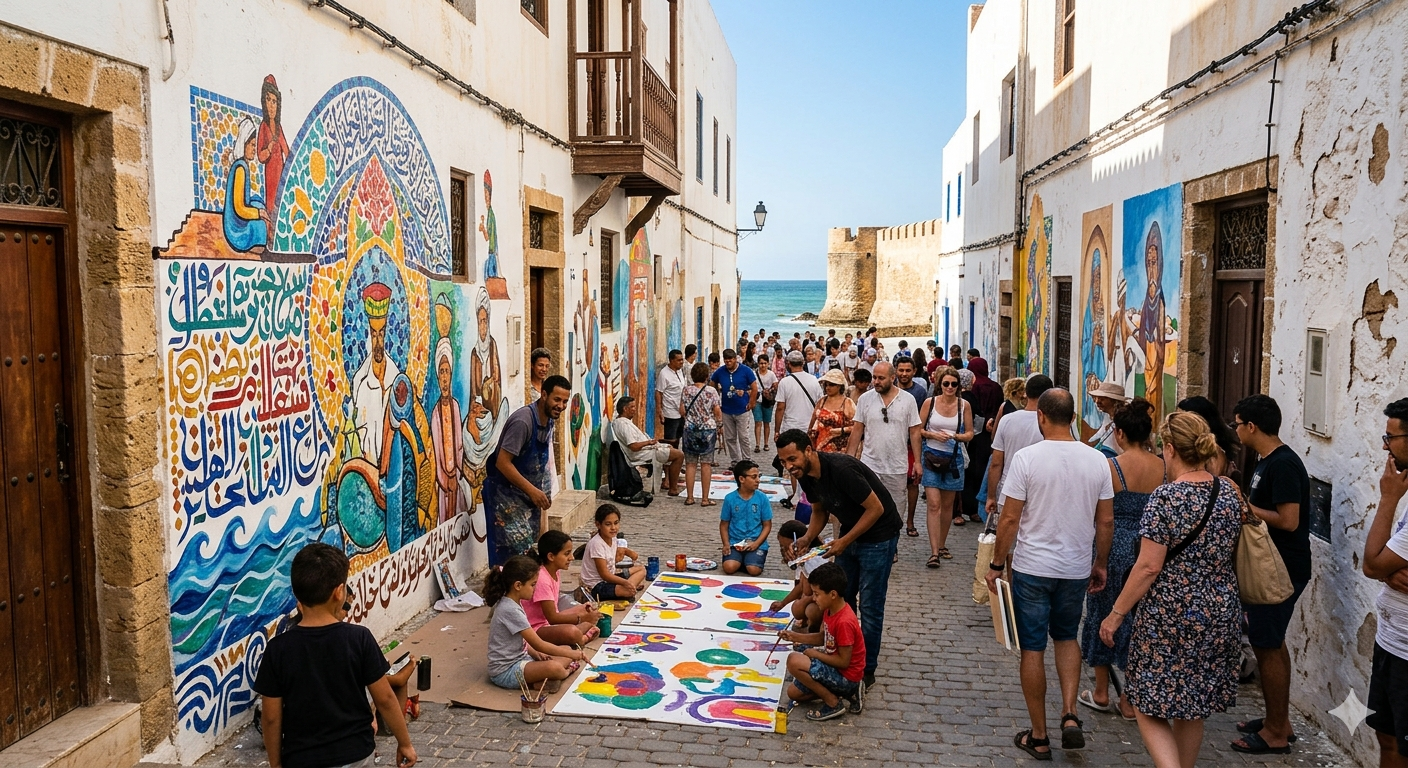
- Features live mural painting where international and Moroccan artists create artworks directly on the medina’s walls.
- Includes street performances, cultural workshops, music, and exhibitions.
- Activities are often free and open to the public, turning the town into a cultural playground.
Autumn Session
The festival also continues into autumn with intellectual seminars, literary events, and special awards:
- Cultural thinkers, poets, and critics gather for seminars on topics like art and technology.
- Workshops, exhibitions, and poetry awards (like the Tchicaya U Tam’si African Poetry Prize) take place.
- Tribute events honoring cultural contributors, such as festival founder Mohamed Benaissa, are common.
What Happens at the Festival?
One of the reasons the Asilah Art Festival is so globally admired is the breadth of its activities — it’s not just an art show, but a full cultural season.
Live Mural Painting
The medina’s walls become an ever‑evolving exhibition, displaying murals that reflect diverse artistic traditions — from geometric motifs to narrative storytelling and abstract expression.
International artists from countries such as Spain, France, Lithuania, Romania, Syria, and Morocco collaborate each year.
These murals often carry social themes, historical references, or artistic interpretations of local lore, all set against the stunning backdrop of Asilah’s classic architecture.
Workshops & Educational Programs
The festival places a strong emphasis on learning and participation:
- Children’s workshops allow young creatives to engage with color, form, and literary expression.
- Youth and adult workshops include theater training, painting sessions, music education programs, and storytelling activities.
- Many programs are designed to help participants build confidence, communication skills, and artistic fluency alongside professional artists.
Music, Performance & Literary Events
The festival showcases theatre productions, poetry readings, concerts, and cultural discussions that complement the visual arts.
These events often take place in venues like the Hassan II Centre or within the medina’s public squares, blending traditional Moroccan music with international artistic influences.
Exhibitions and Art Displays
Several exhibitions run concurrently with the festival, highlighting:
- Contemporary and traditional Moroccan art
- Photography exhibitions
- The work of youth and emerging artists
- Special tributes to influential cultural figures
Festival Impact and Cultural Importance
Urban Renewal and Community Identity
Before the festival’s inception, Asilah was a quiet seaside town with simple whitewashed walls. Today, those same walls are a tourist attraction and cultural landmark.
The festival’s mural program helped revitalize the medina, attracting visitors and fostering an economic boom tied to art and tourism.
How to Experience the Asilah Art Festival
Best Time to Visit
- Summer edition: Usually in July (e.g., July 5–27, 2026).
- Spring and autumn sessions: Additional events take place in April and September–October.
The summer festival is ideal for visitors who want to experience the full atmosphere of mural creation, performances, and workshops.
Travel Tips for Visitors
Where to Stay
Asilah offers a range of accommodations — from traditional riads in the medina to coastal guesthouses — making it easy to stay within walking distance of key festival events.
How to Get There
- Asilah is easily reached from Tangier, with frequent train and bus connections.
- For international travelers, the nearest major airport is Tangier Ibn Battouta Airport, followed by a scenic coastal route to Asilah.
Why the Asilah Art Festival Matters
The festival is more than a seasonal event; it embodies Moroccan cultural pride, international cooperation, and artistic innovation.
- It fosters dialogue between different artistic traditions.
- It stimulates cultural tourism in northern Morocco.
- It continues to evolve, blending heritage and modern expression across generations.
Whether you are an art enthusiast, a cultural explorer, or a traveler seeking unique experiences, the Asilah Art Festival delivers an unforgettable journey into the heart of Moroccan creativity.
From its roots as a local art‑painting initiative to its status today as a major international cultural season, the Asilah Art Festival represents the power of art to transform a city, shape cultural identity, and bring people together across borders and generations.
Plan your trip to Asilah today — and become part of a creative legacy that turns walls into stories and streets into cultural experiences.
1. What types of artwork are displayed at the festival?
At the Asilah Art Festival, you’ll see a wide range of artwork including colorful murals on medina walls, contemporary paintings, traditional Moroccan crafts, photography, and mixed-media installations created by both local and international artists.
2. Can visitors participate in workshops during the festival?
Yes! Visitors can participate in workshops at the Asilah Art Festival, including painting, mural creation, crafts, music, and cultural activities, suitable for both adults and children.
3. How can I get to Asilah from Tangier or other Moroccan cities?
You can reach Asilah easily from Tangier or other Moroccan cities by:
- Train: Regular trains run between Tangier and Asilah, taking about 45 minutes.
- Bus or Grand Taxi: Buses and shared taxis connect Asilah with Tangier, Rabat, and Casablanca.
- Private Car or Tour: Renting a car or booking a guided tour offers flexibility and scenic coastal views.
Trains and buses are reliable and budget-friendly, while private transfers provide more comfort and convenience.